(en ik doomscroll mee)
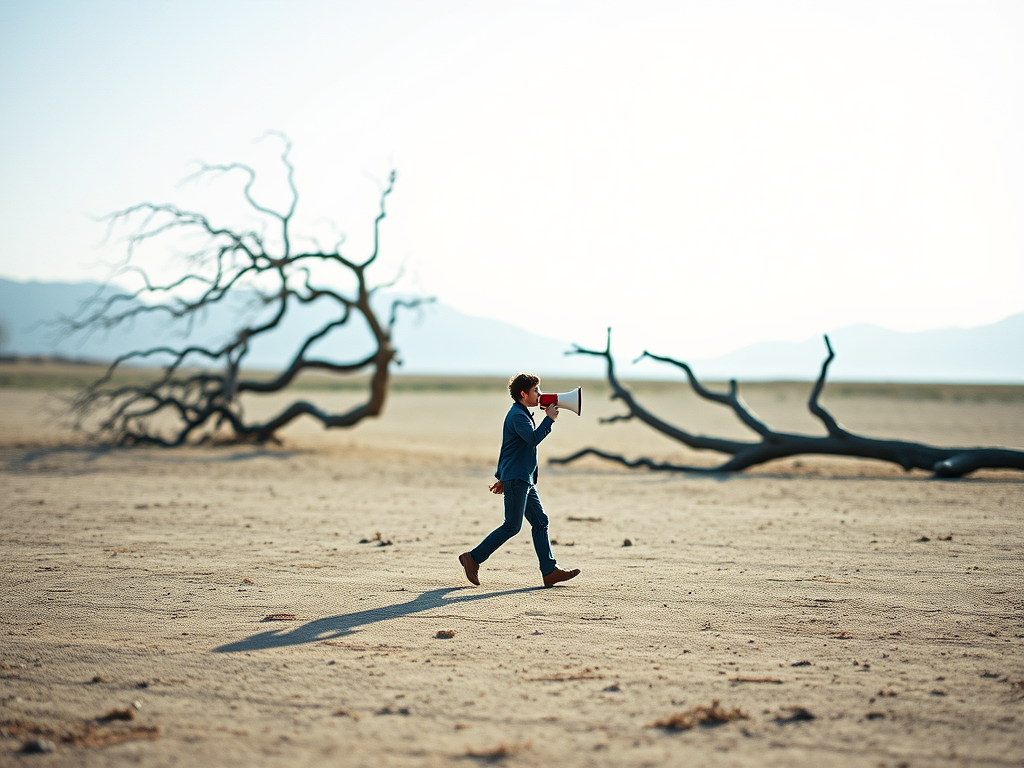
Ik woon in het bos. Dat klinkt rustgevender dan het is. Want ook het bos heeft inmiddels glasvezel.
Via dat glasvezeltje schuift de wereld dagelijks mijn keuken binnen: ICE, Trump, Groenland, Venezuela, oorlog, dreiging, machtsmisbruik, narcistische leiders met grootheidswaan en kleine gewetens. Ik lees het. Ik voel het. In mijn lijf. In mijn kaken. In mijn schouders. Angst, boosheid, verontwaardiging — het hele buffet.
En soms vraag ik me af: had ik mij hier dertig jaar geleden ook zo druk over gemaakt?
Waarschijnlijk wel. Maar ik had toen geen eindeloze tijdlijn. Geen algoritme dat mijn waakhond elk kwartier een nieuw geurspoor van onheil voorschotelde. De wereld was niet kleiner, hij was trager. Een krant. Een journaal. En dan: stilte.
Mijn moeder zat in de jaren tachtig al moedeloos met haar kop lauwe koffie aan tafel, bladerend door de krant. Haar vaste diagnose: “De wereld lijdt aan wortelrot.”
Ze had zo haar redenen.
Mijn grootvader werd vermoord door het naziregime, na lijden en drie concentratiekampen. Zijn broer ook. Verzet betaal je met lijden en dood — dat was de realiteit waarin mijn moeder opgroeide. Verzet was niet gezond of nobel. Verzet was zinloos. Gevaarlijk.
Ik ben dus niet opgevoed met het idee dat verzet loont. Ik ben opgevoed met het idee dat verzet je kapotmaakt.
Misschien verklaart dat waarom ik later juist het ongemak opzocht. In mijn werk. In mijn keuzes. In mijn leven. Documentaires maken. Brieven schrijven. Systemen bevragen tot er rook uit mijn oren kwam. Niet omdat ik dacht dat ik de wereld zou redden, maar omdat niets doen me nog slechter verdroeg.
Angst in HD
Wat me de laatste jaren opvalt: de angst is anders geworden. Intenser. Fysieker. Alsof mijn zenuwstelsel permanent op breaking news staat.
En nee, dat is geen persoonlijke zwakte. Onderzoek laat zien dat herhaalde blootstelling aan dreigend nieuws — ook als het zich ver van je bed afspeelt — leidt tot meetbare stressreacties: spanning, angst, piekeren, vermoeidheid. Je kunt prima ontregeld raken vanaf de bank.
Daar helpt geen bos tegen. Ook geen zonnepanelen. En zelfs geen 4×4 waarmee je theoretisch kunt vluchten voor de volgende ramp.
De wereld komt gewoon mee naar binnen. In mijn broekzak. Op mijn scherm. Op mijn netvlies.
Demonstreren of bij de kachel blijven
Onlangs was hier een tweede demonstratie tegen de bouw van grootschalige biogascentrales. Vernietigend voor natuur, water, lucht en de leefbaarheid van dorpen die toevallig niet belangrijk genoeg zijn.
De eerste keer liep ik mee. Spandoek. Overtuiging. Solidariteit.
De tweede keer zei ik nee.
Ik bleef bij de kachel.
En voelde me twee dagen een lafaard.
Mijn ene hersenhelft zei: je laat het afweten.
Mijn andere fluisterde met de stem van mijn moeder: wortelrot.
Wat heeft het voor zin om te marcheren als energiepolitiek allang geen democratisch speelveld meer is, maar een geldmachine voor enkelen en een leefprobleem voor velen? Energie is macht. Macht luistert slecht naar spandoeken.
En toch knaagt het. Want ik kan demonstreren. Dat is luxe. Verzet als het uitkomt.
Avatar, LinkedIn en het grote verenfestijn
Gisteren zat ik met vrienden in de bioscoop. Avatar. Ruim drie uur lang vliegende vissen, agressieve octopussen en hysterische CGI-gevechten over het lot van de wereld. Ik verliet de zaal murf en leeg en dacht: dit is hoe het nieuws ook voelt. Overweldigend. Bombastisch. En met dezelfde vraag achteraf: wie ben ik in dit verhaal eigenlijk?
Ik heb geen vliegende vis. Geen wapen. Geen leger. Alleen gedachten. Woorden. Twijfel.
Op LinkedIn zie ik ondertussen mensen die vertellen hoe fantastisch hun eigen seminar was, hoe betekenisvol hun baan, hoe succesvol hun missie — bevestigd door duimpjes, hartjes en applaus. Succes baart succes. Twijfel oogst weinig.
Schrijf ik over bomen of een poëtische lofzang over Spanje, dan krijg ik complimenten. Wat mooi geschreven.
Maar ik wil eigenlijk niet mooi schrijven. Ik wil schrijven als wapen.
Alleen: woorden zijn geen granaten. Ze zijn eerder steentjes. Soms raken ze iets. Vaak niet.
Aussteigen, luxe-editie
De eerste keer dat ik naar Spanje vertrok om een aussteigersbestaan te leiden, was het overzichtelijk. Geen internet. Nauwelijks nieuws. De wereld was groot, maar ver weg. Ik wist: zelfvoorzienend leven is een druppel op een gloeiende plaat — maar wel mijn druppel.
Nu, dertig jaar later, ben ik opnieuw een aussteiger. Luxe-editie. Met zonnepanelen. Met snelle wifi. Met een hoofd dat meer weet dan goed voor hem is.
Ik ben een kleinere druppel geworden op een grotere plaat. Dat voelt soms zinloos. En tegelijk maakt het me scherper. Minder naïef. Minder heroïsch.
Wat blijft
Ik ben geen slachtoffer. Geen dader. Geen held.
Ik ben iemand die bang en boos kan zijn over de toestand van de wereld, en die desondanks blijft functioneren.
Mijn leven zat vol verzet. Soms zichtbaar, soms stil. Soms effectief, soms niet.
Is de wereld daardoor beter geworden? Ja en nee.
Maar één ding weet ik zeker: ik kan mezelf nooit verwijten dat het me koud liet.
Misschien is dat wat er overblijft als wortelrot de diagnose is:
niet genezen, niet redden, niet winnen — maar weigeren om ongevoelig te worden.
En soms betekent dat demonstreren.
En soms betekent dat bij de kachel blijven.
En soms betekent dat een boom aankijken en denken: jij doet tenminste gewoon je werk.
Noten – wetenschappelijke context
(voor wie wil checken of dit niet “tussen de oren” zit)
- Holman, Garfin & Silver (2014) – PNAS
Toonden aan dat intensieve mediablootstelling na de Boston Marathon-bomaanslag leidde tot meer acute stressdan directe blootstelling bij sommige ooggetuigen.
→ Indirecte dreiging kan psychologisch zwaarder wegen dan nabijheid. - Thompson et al. (2019) – Science Advances
Beschrijven een feedbackloop tussen mediaconsumptie over geweld en toenemende stress en angst. - American Psychological Association (APA, 2022–2024)
Over news overload en political stress: voortdurende blootstelling aan politiek conflict en dreiging verhoogt stress, somberheid en machteloosheid, terwijl betekenisvolle betrokkenheid dit kan dempen. - Puryear et al. (2024) – Journal of Personality and Social Psychology
Laat zien hoe virale signalen op sociale media morele verontwaardiging versterken, los van feitelijke impact. - Vestergren et al. (2019) – Journal of Social Issues
Onderzoek naar collectieve actie laat zien dat activisme psychologische verandering en zingeving kan opleveren, maar ook uitputtend kan zijn zonder sociale bedding. - Sagi-Schwartz et al. (2008); El-Khalil et al. (2025)
Over intergenerationele overdracht van trauma: effecten zijn niet automatisch, maar context- en betekenisafhankelijk — wat ruimte laat voor zowel erfenis als eigen keuzes.
(English version)
The world is suffering from root rot
(and I’m doomscrolling along)
I live in the woods. That sounds more peaceful than it is. Because the woods, too, now have fibre-optic internet.
Through that fibre cable, the world enters my kitchen every day: ICE, Trump, Greenland, Venezuela, war, threat, abuse of power, narcissistic leaders with delusions of grandeur and very small consciences. I read it. I feel it. In my body. In my jaw. In my shoulders. Fear, anger, outrage — the full menu.
And sometimes I wonder: would I have felt this strongly thirty years ago?
Probably. But back then there was no infinite timeline. No algorithm tugging at my watchdog brain every fifteen minutes with a fresh scent of danger. The world wasn’t smaller; it was slower. A newspaper. The evening news. And then: silence.
In the 1980s my mother already sat at the kitchen table, leafing through the paper with a cup of lukewarm coffee, thoroughly disheartened. Her diagnosis was always the same: “The world is suffering from root rot.”
She had her reasons.
My grandfather was murdered by the Nazi regime, after years of suffering and three concentration camps. His brother too. Resistance, in my mother’s world, was paid for with pain and death. It was neither noble nor healthy. Resistance was futile. Dangerous.
I was not raised with the idea that resistance is virtuous.
I was raised with the idea that resistance destroys you.
Perhaps that explains why I later went looking for discomfort. In my work. In my choices. In my life. Making documentaries. Writing letters. Questioning systems until smoke came out of my ears. Not because I believed I would save the world, but because doing nothing felt worse.
Fear in HD
What strikes me most in recent years is that fear has changed. It has become more intense. More physical. As if my nervous system is permanently set to breaking news.
And no, this is not personal weakness. Research shows that repeated exposure to threatening news — even when it happens far away — leads to measurable stress responses: tension, anxiety, rumination, exhaustion. One can become genuinely dysregulated from the sofa.
The forest doesn’t fix that. Neither do solar panels. Not even a 4×4 that might, in theory, get you away from the next disaster.
The world simply comes inside with you. In your pocket. On your screen. On your nervous system.
Marching or staying by the stove
Recently there was a second demonstration here against the construction of large-scale biogas plants. Devastating for nature, water, air and the liveability of villages that happen not to matter enough.
The first time, I marched. Banner. Conviction. Solidarity.
The second time, I said no.
I stayed by the stove.
And felt like a coward for two days.
One half of my brain said: you’re letting people down.
The other whispered, in my mother’s voice: root rot.
What is the point of marching when energy politics is no longer a democratic playing field, but a money machine for the few and a survival problem for the many? Energy is power. And power does not listen to banners.
And yet it gnaws at me. Because I can march. That, in itself, is a luxury. Resistance when it suits.
Avatar, LinkedIn and the great feather parade
Yesterday I found myself in the cinema watching Avatar. Three hours of flying fish, aggressive octopuses and hysterical CGI battles over the fate of the world. I left the cinema numb and empty, thinking: this is exactly how the news feels. Overwhelming. Bombastic. And leaving behind the same question: who am I in this story, exactly?
I have no flying fish. No weapon. No army. Just thoughts. Words. Doubt.
On LinkedIn, meanwhile, I scroll past people announcing how wonderful their own seminar was, how meaningful their job, how successful their mission — all confirmed by thumbs, hearts and applause. Success breeds success. Doubt yields little.
When I write about trees, I get compliments. So beautifully written.
But I don’t want to write beautifully. I want to write like a weapon.
Only: words are not grenades. They are pebbles. Sometimes they hit something. Often they don’t.
Opting out, luxury edition
The first time I moved to Spain to live an Aussteiger life, things were simple. No internet. Hardly any news. The world was big, but far away. I knew then: living self-sufficiently is a drop on a hot plate — but it was my drop.
Thirty years later, I am opting out again. Luxury edition. With solar panels. With fast Wi-Fi. With a head that knows more than is good for it.
I have become a smaller drop on a much larger plate. That sometimes feels pointless. And at the same time, it sharpens me. Less naïve. Less heroic.
What remains
I am not a victim. Not a perpetrator. Not a hero.
I am someone who can feel fear and anger about the state of the world and still function.
My life has been full of resistance. Sometimes visible, sometimes quiet. Sometimes effective, sometimes not.
Has the world become better because of it? Yes and no.
But one thing I know for certain: I will never be able to accuse myself of indifference.
Perhaps that is what remains when root rot is the diagnosis:
not curing, not saving, not winning — but refusing to go numb.
And sometimes that means marching.
And sometimes it means staying by the stove.
And sometimes it means looking at a tree and thinking: at least you are simply doing your job.
Notes – scientific context (selected)
(for those who prefer evidence to reassurance)
- Holman, Garfin & Silver (2014) – PNAS
Intensive media exposure following the Boston Marathon bombing was associated with higher acute stress than direct exposure among some eyewitnesses. - Thompson et al. (2019) – Science Advances
Describes a feedback loop between violent news consumption and rising psychological distress. - American Psychological Association (2022–2024)
On news overload and political stress: prolonged exposure to political conflict increases stress and helplessness, while meaningful engagement can buffer these effects. - Puryear et al. (2024) – Journal of Personality and Social Psychology
Shows how viral cues on social media amplify moral outrage, regardless of real-world impact. - Vestergren et al. (2019) – Journal of Social Issues
Research on collective action indicates that activism can foster psychological change and meaning, but may also lead to exhaustion without social support. - Sagi-Schwartz et al. (2008); El-Khalil et al. (2025)
On intergenerational trauma: effects are context-dependent, not automatic — leaving room for both inheritance and agency.
 Tanja Nabben blogt
Plaats een reactie